Why Your Salt Water Pool Smells Like Chlorine
That smell isn’t too much chlorine. It’s chloramines, and the CDC says it directly: “If you smell ‘chlorine’ at the place you swim, you are probably smelling chloramines.” A salt water pool that smells like chlorine needs more free chlorine and a shock, not less.
Where the smell comes from
Chloramines form when chlorine “combines with pee, poop, sweat, dirt, skin cells, deodorant, and makeup,” in the CDC’s words. The cell turns salt into chlorine, so a salt pool makes them exactly like any chlorine pool.
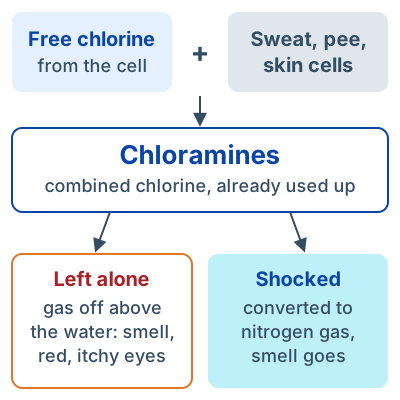
The CDC’s pool operation guide says chloramines irritate skin, eyes and the respiratory tract “when they turn into gas into the air above the water, particularly indoors.”
Test for combined chlorine
Combined chlorine confirms it. Use a kit that reads free and total chlorine.
Combined chlorine = total chlorine minus free chlorine
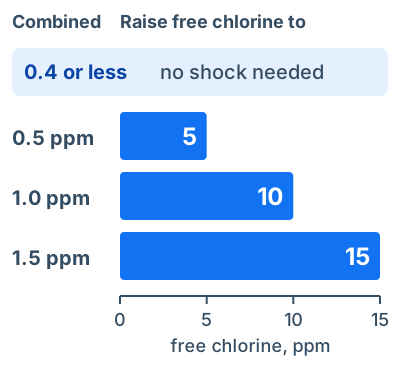
The CDC notes most health departments cap combined chlorine at 0.4 ppm or less. Above that, shock.
Shock it, don’t turn the cell down
The CDC’s superchlorination rule: “Raise the free chlorine level to 10 times the combined chlorine level.”
- Test. Read free and total chlorine, then work out combined chlorine.
- Dose. Add liquid chlorine to reach 10 times the combined reading. Amounts are in salt water pool shock.
- Keep swimmers out. The CDC closes the pool during superchlorination.
- Retest. Swim once free chlorine is back in your normal range. For a routine, see how often to shock a salt water pool.
Super chlorinate takes a day. Hayward’s AquaRite manual says the button shocks the water “for 24 hours.” Test afterward and top up with liquid chlorine if you are short of the target.
Low chlorine for your CYA makes it worse
Stabilizer raises the free chlorine you need. Orenda says “CYA substantially reduces the concentration of HOCl in the water, which slows chlorine down.”
Hayward free chlorine
1.0 to 3.0 ppm
The AquaRite chart's daily range.
Hayward stabilizer
60 to 80 ppm
Cyanuric acid, from the same chart.
Low chlorine with high CYA leaves little in reserve for swimmer waste. See optimal chlorine levels and the CYA chlorine chart for your target.
Keep it from coming back
Less waste in means less chlorine tied up. The CDC’s two cheapest fixes:
Shower first
1 minute
It "can remove most of the dirt or anything else on your body."
For indoor pools the CDC adds fresh air and UV or ozone. See also the salt water pools hub and salt cell guides.
Frequently asked questions
Should a salt water pool smell like chlorine?
Not much. A strong smell means chloramines have built up, so test combined chlorine before changing anything.
Should I turn my salt cell down if the pool smells like chlorine?
No. Less output leaves less free chlorine to break down chloramines, so the smell lingers. Shock instead.
Is the chlorine smell harmful?
The CDC lists “red and itchy eyes, skin irritation, and rashes,” and the gas is worst indoors.
Why does my salt pool smell after a pool party?
Extra swimmers bring more waste, and the cell only adds chlorine at a steady rate. Test combined chlorine that evening.
Last updated