Brown Stain in Salt Water Pool: Iron or Leaves?
A brown stain in a salt water pool is usually iron, which Orenda says turns orange, brown or red when oxidized. The other common cause is leaves. Don’t shock until you know which: chlorine is what turns dissolved iron into a stain.
Run two tests first
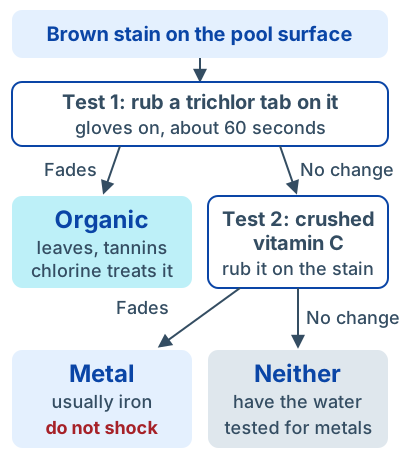
Two one-minute tests on the stain tell organic from metal.
- Trichlor tab. Wearing gloves, rub a trichlor tab on the stain for about 60 seconds. If it cleans up quickly, it's likely organic.
- Vitamin C. If the tab did nothing, rub crushed vitamin C tablets on it. Fading means metal.
- Neither. Have a water sample tested for metals before you buy a stain product.
What the color tells you
Color narrows the suspect before you test. Metal colors are from Orenda, with manganese’s brownish-black stain from a UMass fact sheet.
Iron
Orange, brown, red
Rust colored. The usual brown stain.
Manganese
Purple to black
A very dark brown stain can be this.
Copper
Blue, green
Turquoise, not brown.
Why shock makes a metal stain worse
Dissolved iron is invisible until something oxidizes it. A UMass fact sheet puts it plainly: “Chlorination rapidly changes dissolved iron into oxidized (colored) iron that will precipitate into a solid form.”
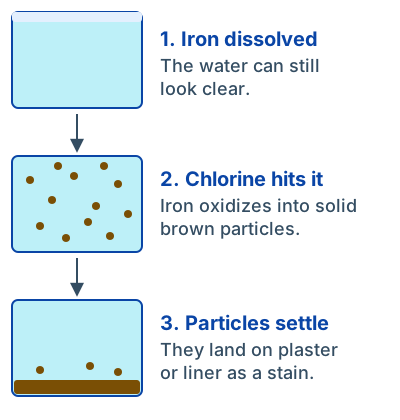
A shock dose is a lot of oxidizer at once, so salt water pool shock is the right tool for an organic stain and the wrong first move for iron.
How to treat each kind
Organic stains get more chlorine and a brush. Metal stains get lifted with acid while a sequestrant holds the metal.
Metal
Sequestrant, then ascorbic acid
The sequestrant goes in first to grab metals released as the acid lifts the stain.
Orenda’s organic procedure calls for non-stabilized chlorine; stabilized shock would add cyanuric acid. If you already see the symptoms of high cyanuric acid in a pool, draining and diluting is the most effective fix; see how to reduce cyanuric acid in a swimming pool.
The metal is still in the water. A sequestrant holds it in suspension, not solution, and Orenda calls sequestrants temporary: they “break down in sunlight.” Expect to redose, which makes it a repeat line on your salt water pool chemicals list and your salt water pool maintenance routine until the source is fixed.
Where the iron came from
Iron usually arrives with fill water. Orenda: “tap water often contains metals; especially well water,” and it recommends testing fill water and filtering metals out.
Test the refill. After a heavy backwash or partial drain, test the new water for metals before it goes in. See how to backwash a salt water pool to plan how much you’ll lose, and the salt cell hub for the rest of your water care.
Frequently asked questions
Does salt cause brown stains in a pool?
Not directly. The iron comes in with fill water, and the chlorine your cell makes oxidizes it into a stain.
Is brown water the same as a cloudy pool?
No. A tint you can see through is dissolved color; tannins can turn water brownish-green. Milky water that hides the drain is a cloudy salt water pool.
The brown is on my salt cell. Same fix?
No. These tests are for pool surfaces, so don’t rub vitamin C on cell plates. Compare it with what a dirty salt cell looks like; white and crusty is salt cell calcium buildup.
Can I swim during stain treatment?
Not while chlorine is held at 10 ppm for an organic stain. The CDC’s superchlorination steps close the pool to swimmers until free chlorine is back in the normal operating range.
Last updated